 跳到内容
跳到内容 
What Is a CNC Flat-Bed Lathe?
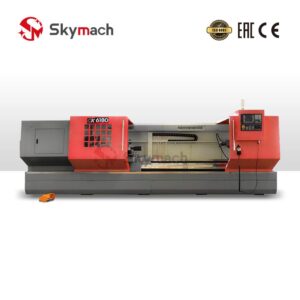
A CNC flat-bed lathe features a horizontal, flat bed and a turret that moves along the X (cross) and Z (longitudinal) axes. It is often seen as the modern evolution of the traditional manual lathe, now controlled via CNC programming.
These machines are known for their strong structural rigidity, simpler design, and ease of maintenance, making them suitable for heavy-duty and long-part turning. Flat-bed lathes are widely used in industries such as oil and gas, construction machinery, repair work, and custom job shops.
Key Characteristics:
-
Flat horizontal bed layout
-
Manual or powered tailstock
-
Lower cost and simpler operation
-
Easier workpiece loading and alignment
-
Suitable for long shafts and large-diameter parts
Advantages:
-
High stability for heavy cutting
-
Straightforward structure = lower purchase and maintenance cost
-
Ideal for custom jobs or small-batch production
-
Easier to retrofit and maintain
What Is a CNC Slant-Bed Lathe?

A CNC slant-bed lathe features a bed tilted typically at a 30° to 45° angle. This design improves chip evacuation and ergonomics, while enhancing machine rigidity and speed during operation.
Slant-bed lathes are typically found in high-precision, high-speed production environments, including automotive, aerospace, and electronics manufacturing. The angled design allows for better tool clearance, faster tool changes, and greater automation compatibility.
Key Characteristics:
-
Slanted bed (30°–45°) design
-
Higher tool turret capacity
-
Excellent chip flow and coolant access
-
Supports higher cutting speeds and tighter tolerances
-
Often integrated with live tooling or sub-spindles
Advantages:
-
Improved cutting accuracy and rigidity
-
Better chip disposal = cleaner, safer operation
-
Faster tool changes and cycle times
-
More compact footprint
-
Compatible with automation systems (e.g., bar feeders, robots)
Flat-Bed vs. Slant-Bed: Key Differences
| Feature | Flat-Bed Lathe | Slant-Bed Lathe |
|---|---|---|
| Bed Structure | Horizontal, flat | Angled (typically 30–45°) |
| Chip Removal | Manual or limited | Gravity-assisted, excellent evacuation |
| Cutting Speed | Moderate | High-speed capable |
| Rigidity | Strong for large, heavy parts | Higher dynamic rigidity for fast precision work |
| Footprint | Larger | More compact |
| Tool Turret | Simple, fewer tools | More tools, faster indexing |
| Automation | Basic or manual loading | Highly compatible with automation |
| Best for | Heavy-duty turning, long shafts, repair work | High-precision, mass production of complex parts |
Which One Should You Choose?
Your choice depends on your production goals, part type, and budget:
Choose a CNC Flat-Bed Lathe if:
-
You primarily machine long, large, or heavy workpieces.
-
Your production volume is low to medium.
-
You’re doing general-purpose or repair machining.
-
Budget and ease of maintenance are priorities.
Choose a CNC Slant-Bed Lathe if:
-
You produce small to medium-sized parts in higher volumes.
-
You need faster cycle times and tighter tolerances.
-
You’re looking for automation and multi-tool capabilities.
-
Precision and chip evacuation are critical.
Both flat-bed and slant-bed CNC lathes have their place in the modern machine shop. The flat-bed lathe is ideal for heavy, straightforward turning work where size and strength matter. In contrast, the slant-bed lathe excels in precision, speed, and production efficiency, especially in automated environments.By understanding the differences in design and function, you can choose the machine that best aligns with your shop’s capabilities and long-term goals.

